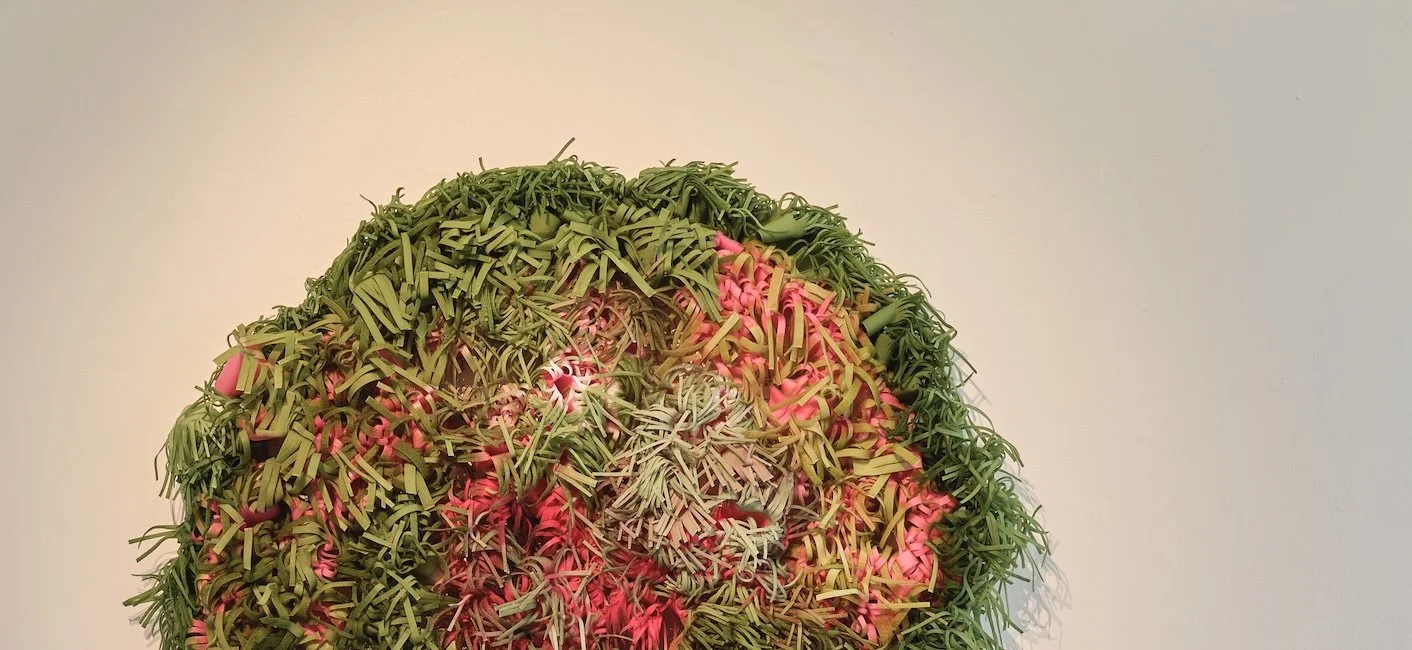
Purchased for Takeda Ireland Collection
An acquisition made through Acrylicize London 2024
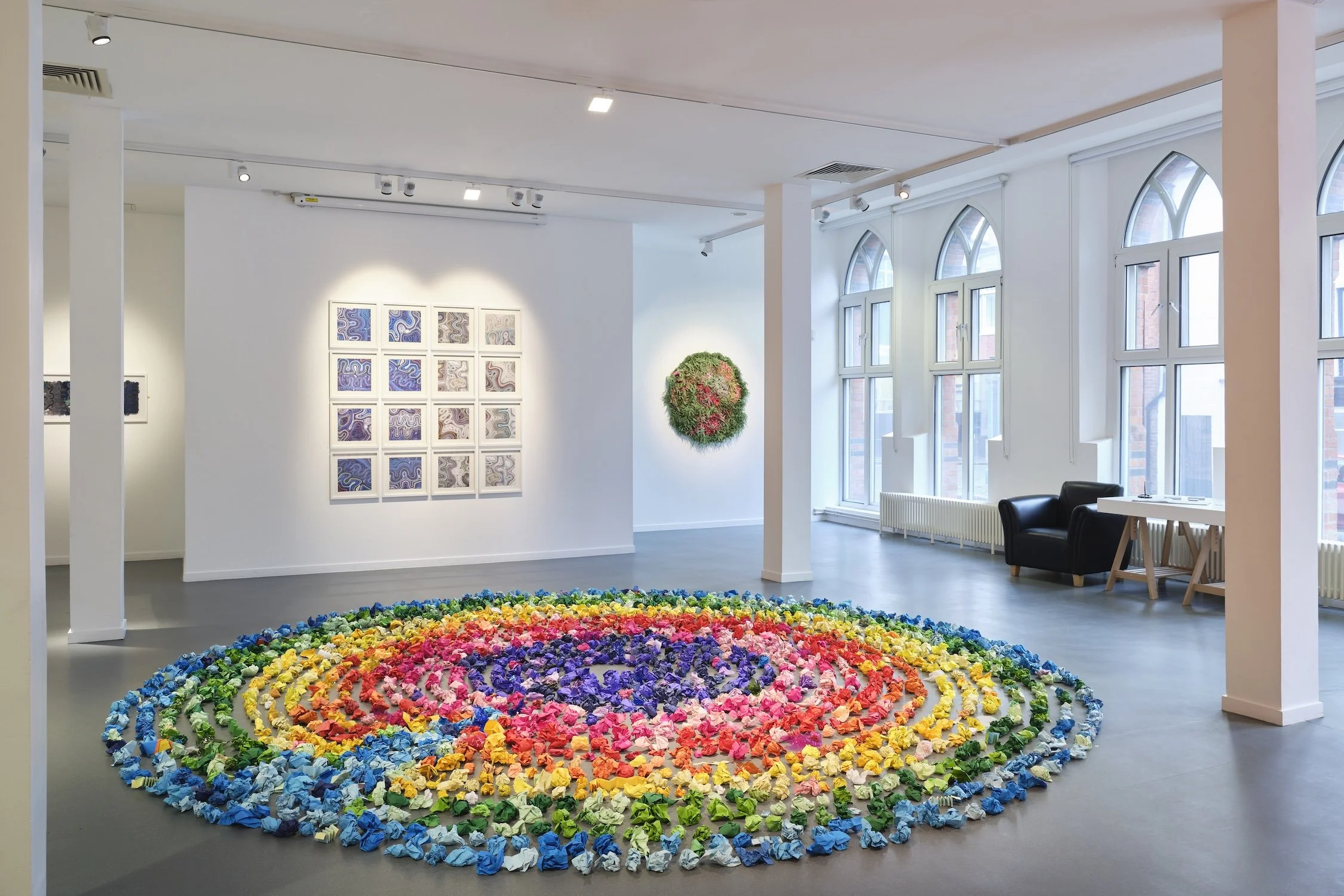
Exhibited during RECONNECTED, a solo exhibition at Down Arts Centre, Downpatrick | October 2023
Photo Credit | Simon Mills
The Curragh Wrens were a marginalised community of women in mid-nineteenth-century Ireland who confronted stark and often untenable choices during the period of the Great Famine. Faced with the prospect of starvation, incarceration in the workhouse, or survival through informal and socially stigmatised means, these women occupied a precarious position at the fringes of society.
Residing primarily on the margins of garrison towns on the Curragh, they inhabited makeshift shelters colloquially known as “she-barracks.” Lacking formal housing, many constructed rudimentary dwellings by hollowing out the ground beneath furze bushes, an adaptive strategy that gave rise to the epithet “Wrens,” evoking the nesting habits of the bird. Their living conditions reflected acute poverty, food insecurity, and social exclusion, compounded by their responsibility for dependent children.
The Curragh Wrens were subject to intense public scrutiny, particularly during the 1860s, when their lives were documented through the moralising lens of Victorian journalism. Such representations frequently reinforced dominant narratives of deviance and immorality, obscuring the structural conditions that shaped their circumstances. Despite systemic marginalisation—including exclusion from local towns and exposure to violence—the women established a form of collective organisation characterised by mutual aid, shared resources, and emotional interdependence. This cooperative social structure functioned as an alternative support system in the absence of institutional care.
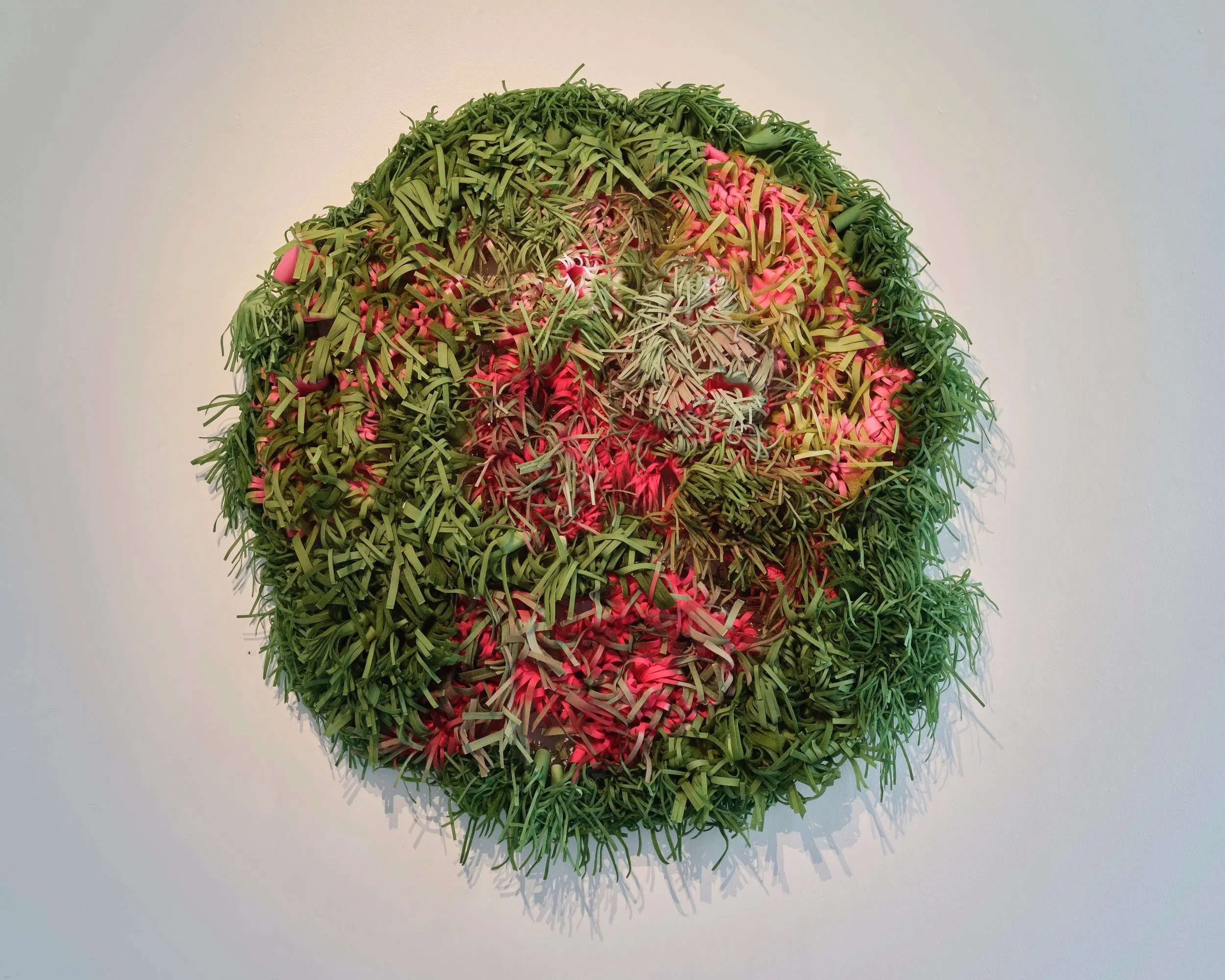
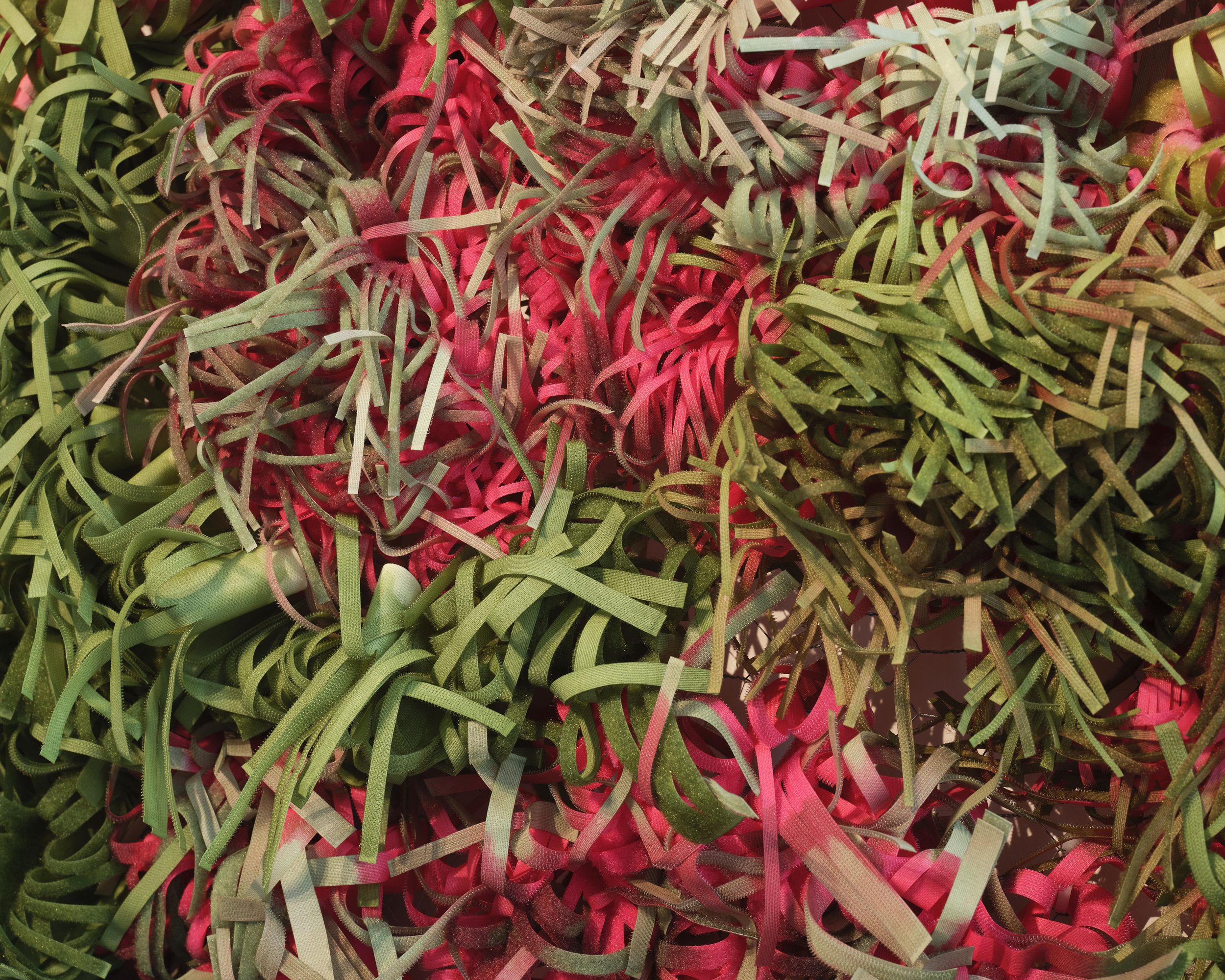
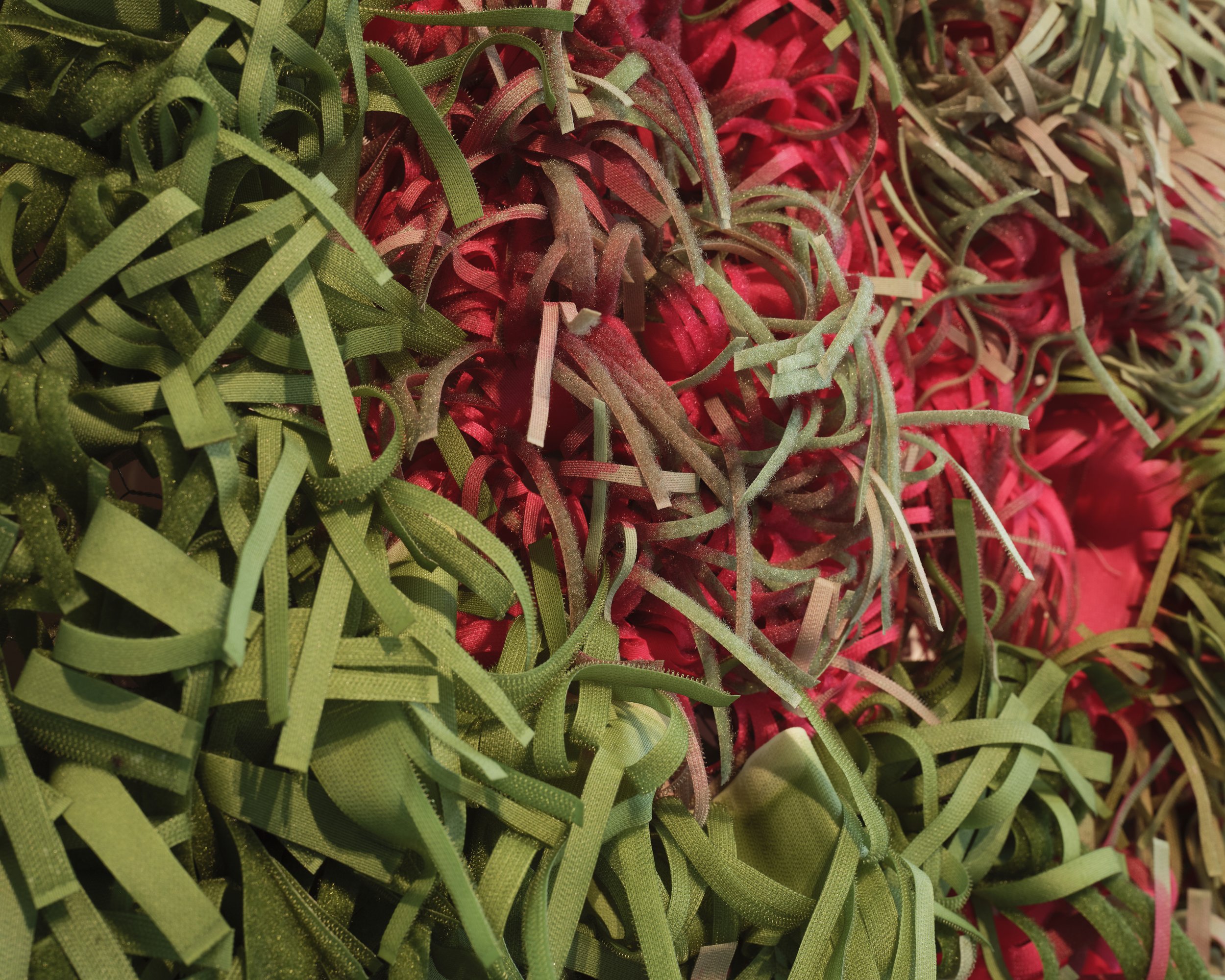
This artwork draws upon these historical narratives and situates them in dialogue with the artist’s socially engaged practice, particularly her work with women and children seeking refuge from forced marriage, displacement, and conflict. The installation comprises pigmented 150mm Velcro, suspended from an aluminium hoop, employing materiality and repetition to evoke themes of resilience, precarity, and communal interconnection.